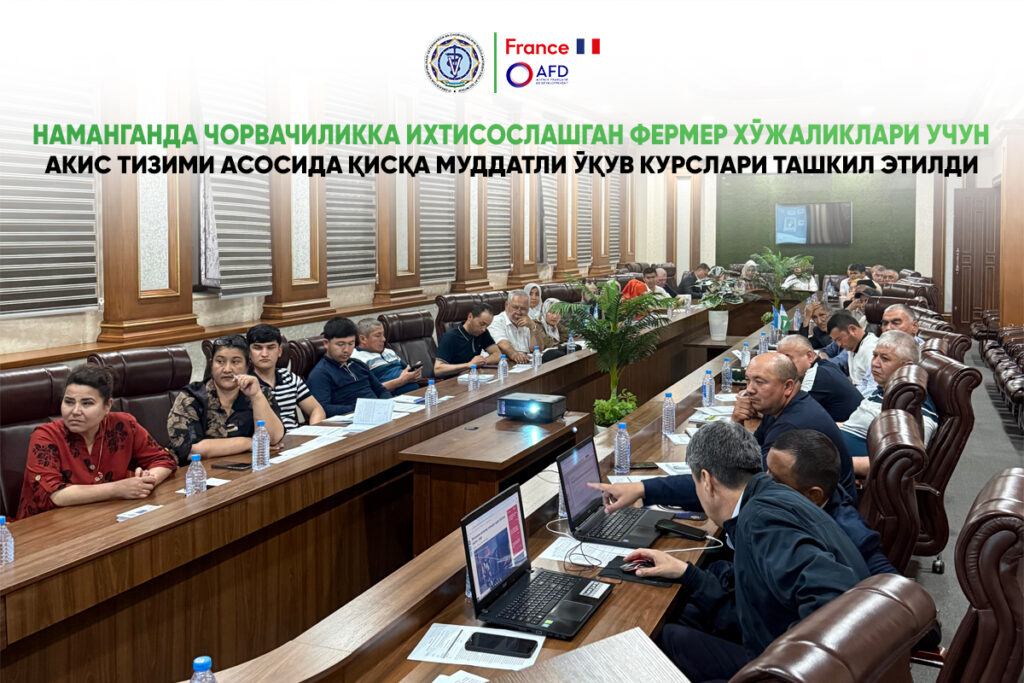
Short-term training courses based on the AKIS system have been organized in Namangan for livestock-specialized farms
Published 28.04.2026
In order to take the livestock sector to a new level and enhance the capacity of specialists, a promising project has been launched in the Namangan region. The first phase of short-term training courses for farm specialists has begun within the framework of the “Financing sustainable livestock development” project implemented with the participation of the French Development Agency (AFD), in cooperation with the Committee of veterinary and livestock development. The main goal of this initiative is to introduce international management standards into the sector and improve the qualifications of local personnel.
Qualified experts and innovative knowledge as a key factor for success
The Agricultural knowledge and innovation system (AKIS) has been selected as the main framework of the training process. It covers the most relevant areas such as livestock feeding, milking hygiene, and first veterinary aid. The training sessions are conducted by experienced specialists in the field, including doctor of veterinary sciences Sh. Abdurasulov, doctor of agricultural sciences U. Soatov, candidate of agricultural sciences B. Allashov, PhD in veterinary sciences J. Isaev, and associate professor A. Amirov. Participants were provided with specially prepared training materials, and their level of knowledge is assessed through pre- and post-training tests.
Speaking about the purpose of these courses, professor U. Soatov noted: “This training process provides farmers not only with theoretical knowledge but also with practical solutions to complex issues encountered in daily operations. Most importantly, participants are learning approaches that will help increase efficiency in their farms.”
Practical sessions and experience exchange
The training is organized in a three-day format. After two days of theoretical lessons, participants are gaining practical skills directly at farm bases. During the sessions, they not only learn from experts but also analyze the performance of their own farms. For instance, according to Kamoliddin Madumarov, the head of the “Madumarov K” farm, the new recommendations on feeding and disease prevention were especially useful and relevant for their operations.
Women’s participation and biosecurity issues
Special attention within the project is given to supporting women working in the sector. Ensuring that at least 40 percent of each group consists of women contributes to increasing their economic potential in rural areas. According to Dilfuza Ganieva, head of the “Karimjon +” farm, the knowledge gained on proper biosecurity measures, especially in preventing diseases such as protein-related illnesses, plays a crucial role in preserving livestock and preventing economic losses.
This initiative, launched in Namangan region, is planned to be gradually expanded to nine other regions of the country and the Republic of Karakalpakstan in the future.