When environmental standards are mentioned, businesses often react predictably: additional costs, more complex processes, and requirements that are difficult to meet. However, international practice—and the experience of the French Development Agency (AFD) in particular—demonstrates a different reality. Environmental standards have long ceased to be merely a tool for environmental protection. Today, they represent a strategic asset that provides access to markets, financing, and long-term competitiveness.
What Lies Behind the Concept of Environmental Standards?
In international practice, environmental standards in livestock farming refer to a comprehensive set of principles and best available technologies aimed at minimizing carbon footprints, preserving biodiversity, ensuring efficient resource use, and promoting the principles of a circular economy.
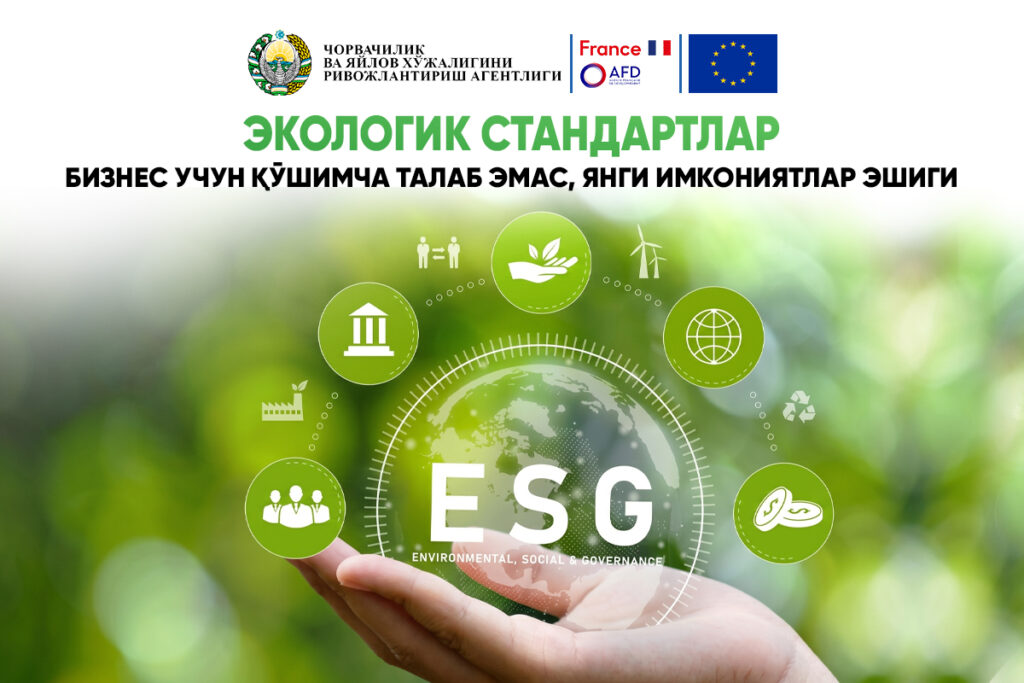
It is important to distinguish between three concepts that are often confused. Environmental standards are a set of rules and requirements governing processes or products. Environmental certification is the procedure used to verify compliance with these standards. The ESG approach is a broader business management strategy that integrates environmental, social, and governance considerations. While closely interconnected, these three elements perform distinct functions within the overall framework of sustainable development.
Key Global Standards in the Industry
The most widely used certification systems can be divided into several categories:
• International management standards — primarily ISO 14001, the fundamental standard for environmental management systems, and GLOBALG.A.P., one of the most authoritative standards for agricultural enterprises, which includes strict requirements for product safety and the efficient use of resources.
• Organic standards — including EU Organic, USDA Organic, and the biodynamic Demeter standards — prohibit the preventive use of antibiotics, growth hormones, and synthetic pesticides. Demeter is considered the most rigorous system, viewing the farm as a single, self-sustaining ecological organism.
• Animal welfare and ethical standards — such as Certified Animal Welfare Approved, Certified Grassfed, and Rainforest Alliance, which include requirements for the protection of forests, soils, and water resources in pasture management.
• Comprehensive sustainability initiatives — including Leading Harvest and Global SLP (Smart Livestock Practices)— focus on transparency, ethical animal treatment, and sustainability at the systemic level.
For companies working with international partners, the FAO’s Livestock Environmental Assessment and Performance (LEAP) Partnership also plays a particularly important role. It develops globally recognized methodologies for measuring and reducing CO₂ and methane emissions in line with the United Nations Sustainable Development Goals (SDGs).
Real Benefits for Business
The argument that environmental standards are primarily a cost burden does not stand up to practical experience. The adoption of green technologies in livestock farming addresses financial, market, and management challenges simultaneously.
- From an operational efficiency perspective, the transition to environmental standards can significantly reduce costs. Energy-efficient solutions lower electricity consumption, waste management systems convert manure into biogas and organic fertilizers, and the rational use of water and feed reduces production costs. At the same time, the risks of fines and regulatory penalties are minimized.
- From a financing perspective, environmental standards have effectively become a prerequisite for obtaining international funding. Without compliance with ESG principles, major international financial institutions and development organizations—including the World Bank, the European Bank for Reconstruction and Development (EBRD), and the Food and Agriculture Organization of the United Nations (FAO)—are often unwilling to support projects.
- From a market access perspective, compliance with environmental standards helps remove trade barriers and opens access to premium international market segments. Companies can transform their position from local commodity suppliers into strategic partners, enabling them to sell products with higher added value.
The AFD project in Uzbekistan
AFD’s “Financing Sustainable Development of the Livestock Sector” project in Uzbekistan is implemented in line with the United Nations Sustainable Development Goals and the Agency’s own stringent environmental and social standards. The project is based on FAO’s Climate-Smart Agriculture approach and is fully aligned with the Livestock Sector Development Program of the Republic of Uzbekistan for 2022–2026.
At the practical level, the project has introduced green economy principles, European standards for energy-efficient livestock facilities, and modern waste management solutions, including the construction of biogas plants. Recommendations from the World Organisation for Animal Health (WOAH) on biosecurity and animal health monitoring have been incorporated. International standards for sustainable pasture management and balanced livestock nutrition have also been adopted.
A separate focus area involves upgrading local farms and processing enterprises to meet international export requirements, including HACCP and ISO standards.
The Situation in Uzbekistan
The implementation of environmental standards in Uzbekistan’s livestock sector remains at an early but rapidly advancing stage. The government and international organizations are actively promoting sustainable development principles, particularly to address challenges such as pasture degradation, feed shortages, and greenhouse gas emissions.
Key policy frameworks include the national Green Economy Transition Strategy and officially approved best-practice standards for livestock production.
The primary catalyst for this transformation is the growing set of requirements imposed by international investors and financial institutions, which are helping shift the country’s agricultural sector from extensive production models toward sustainable development.
At the same time, the wider adoption of environmental standards is constrained by three major barriers: the high capital costs of green technologies, the limited profitability of many farms, and the underdevelopment of markets for environmentally certified products. Overcoming these challenges requires coordinated efforts by government institutions, businesses, and international partners—the very model being implemented through the AFD project in Uzbekistan.
Conclusion
Environmental standards are changing not only how products are produced, but also how businesses are perceived by markets, investors, and partners. At a time when access to international financing and export markets is becoming increasingly linked to compliance with ESG principles, the question is no longer whether these standards should be adopted. The real question is how quickly businesses can implement them.