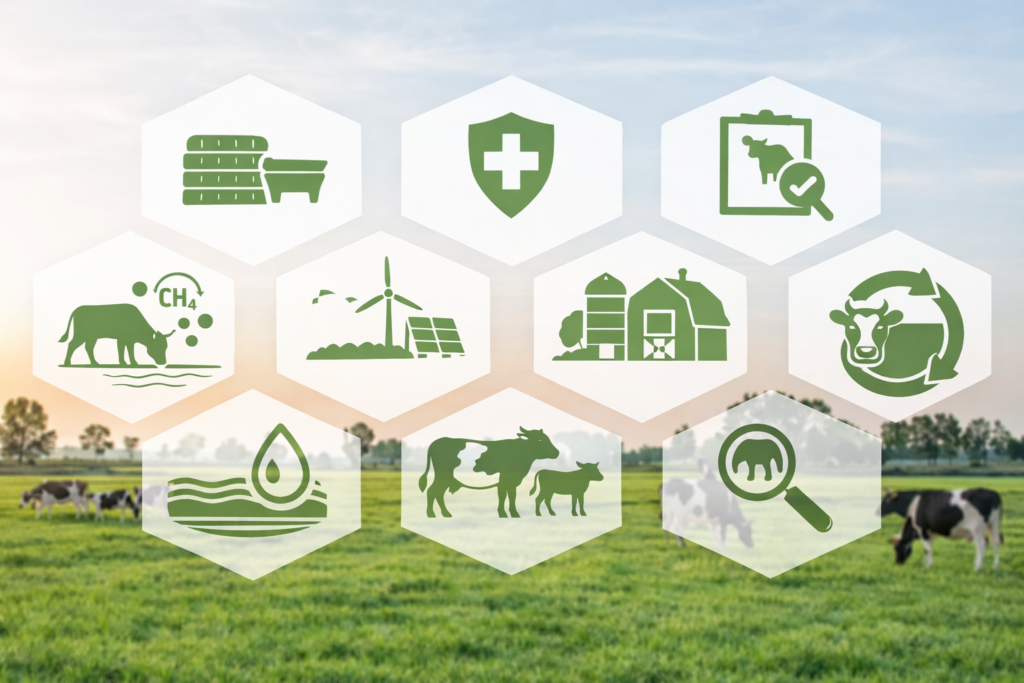
The transition to a “green” economy within the livestock sector entails the adoption of methodologies that are environmentally sustainable, economically viable, and socially responsible. This strategic approach enhances farm productivity, minimizes environmental impact, and fosters the long-term resilience of the industry. In an era of intensifying climate change and increasingly stringent quality standards, the integration of sustainable operational practices has become a fundamental necessity.
Stewardship of natural resources
A primary advantage of the “green” approach is the rational management of water, pastures, and soil resources. Such stewardship is essential for preserving soil fertility and ensuring consistent, long-term agricultural productivity.
Furthermore, eco-efficient practices significantly mitigate environmental pollution and curb greenhouse gas emissions. These objectives are achieved through optimized manure management, enhanced energy efficiency, and the strategic implementation of biogas technologies.
Economic resilience and climate adaptation
Ecological methodologies yield direct economic dividends in addition to environmental preservation. Optimizing energy and resource consumption enhances farm profitability, while alignment with “green” standards facilitates access to markets and innovative financial instruments. Furthermore, resilient forage systems, advanced animal health monitoring, and efficient water management infrastructure enable farms to better navigate extreme weather events and mitigate climate-related risks.
Consumer confidence and sectoral advancement
The evolution of green livestock production bolsters consumer trust and elevates the global competitiveness of the output. By supporting smallholder farmers, enhancing labor conditions, and engaging local communities, the sector fosters a resilient social ecosystem conducive to long-term development.
In essence, a “green” economy in livestock represents a strategic investment in the future. It harmonizes environmental stewardship, economic efficiency, and social sustainability, establishing a robust foundation for consistent growth and international cooperation within the global agricultural sector.